A variety of new material is available from Glossolalia. It includes the
following:
BALLET, new video and audio featuring CAConrad reading from Deviant Propulsion. BALLET is Glossolalia's first 100% pretty, 0% scary creation.
HEDGE MAZE, an audio track featuring the voices of Allyssa Wolf and Jon Leon. HEDGE MAZE originally appeared in Spaltung #2, a multimedia publication of the APG.
A video for SUDDEN SPIDER, featuring Rod Smith reading from The Spider Poems.
A video for ELLA FINDS HER VOICE, featuring Ella Vowell.
As always, Glossolalia is thankful to people who entrusted it with their voices.
As always, this material is available for no cost and little effort at
http://glossolalia-blacksail.blogspot.com/
18.12.07
glossolalia


17.12.07
16.12.07
essay -gertrude stein and the sounded jouissant

essay (work in progress) click here
essay- a little glossary of big whoppers

Language as stuff is pretty weird… it’s full of tropes, loops, gaps and double distenders (think garters). It makes up stories, does impromptu stand-ins and ‘performs’ for (other) objects… ha! a type of textural drive-by/asylum/squirm comedy when seen under the spotlight, it plies itself as culture in our bodies much like the ‘other’s other’ and goes marching on in the abstract, full of mis-meanings perversely masquerading as the true blue blue truth. Given that it lies along side it also lies, damn it, inside itself. Language, is busy displacing, disrupting and cutting off the depths and heights of how far a human and especially a woman can say or be said to go… show… say and perhaps, yes o dear… be. Its nothing personal its been said, but those limits are whoppers that stifle the Whopa’s of a gals oversized, abnormally normal, paroxysms of excitement and pleasurably pleasured ec-stas-y.
click here...
essay
5.12.07
4.12.07
pulsations and Elaine Showalter's A Literature of Their Own
http://www.victorianweb.org/gender/femtheory.html
'The French feminists of the day discussed this Mother Tongue, calling it l'écriture feminine. Accessible to men and women alike, but representing "female sexual morphology," l'écriture feminine sought a way of writing which literally embodied the female, thereby fighting the "subordinating, linear style of classification or distinction." Showalter finds that whether this
clitoral, vulval, vaginal, or uterine; whether centered on semiotic pulsions, childbearing, or jouissance, the feminist theorization of female sexuality/textuality, and its funky audacity in violating patriarchal taboos by unveiling the Medusa, is an exhilarating challenge to phallic discourse.'

things

'Some things become so familiar that they seem blank...' Ruth Salvaggio Sounds of Feminist Theory (8)
my image
Speech is the principle liquid of the body…
 Stein was an eater of words…they were chewed slowly in the mouth.
‘Nothing ever comes but from within...
They ventroquize themselves
Stein was Madam mouth
Her tongue propels her very erotic tongue to clit
Those who dominate make the body disappear Stein reinserts it wetly into literature.
‘Thoughts do not occur to us out of heaven but out of the teeth and mouth and the tongue...'
from
Letter to the Actors Valere Vygotsky, translated by Weiss
ecstasy
 What is the name of ecstasy?
For Stein embodiment is 'to be' in relationship, in the space articulated by the curl, and this approach verses and “sounds” the silence echoing from the self as shell, as the noun, as a container. As shell, the body remains a fixed metaphor for self, a position Stein continually was in the state of undoing. Light on the body as diagrammed is a metaphor for “the other”. The body as shell sealed in linear space, except in instances of unusual eruption, is a body of darkness. Writing from the middle of that space in a vocabulary of thinking, Stein details brightness:
... and in the bright when they are there it is not only very much to do so which willing and they can it is more meant and if coming having it to do it is without it remarkably in no time which is very well shown yesterday as to be willing need it be whatever they can be without a doubt of whatever it is just made to be not only where they went it is as if not coming to be without that they could as wherever now and then called is more than…. (How to Write 335)
As open, the body as bright is situated nowhere. It is a body un-dark because it has no edge to it. It is between the inside and an outside. It does not begin in time or space, it is a continuum, and as such is unfixable. For Stein, the body is beyond visible and invisible. Unlike the eye that could not see itself, this new body as all bodies is covered in senses that include the sense of speech, “a speak” well beyond the frame.
kristen oppenheim off ubuweb

just beautiful...odd...'she was long gone' sweet
Kristin Oppenheim (b. 1959)
Selected Works 1994-1997
1.  Sail On Sailor, 1994 (2:23)
2. She Was Long Gone, 1995, (2:32)
3. Tap Your Shoes, 1996, (2:37)
4. Hey Joe, 1996, (2:16)
5. Tickle, 1997, (2:30)
6. A Woman Left Lonely, 1997, (2:33)
3.12.07
Blogging Feminism
 Blogging Feminism websites of resistance
http://www.barnard.edu/sfonline/blogs/index.htm
my image (on the TV)
Feminist Collections
Women's Studies Quarterly
Feminist / Women's Studies Journals
Feminist Studies
Genders
Outskirts
SIGNS
Third Space
Feminist Magazines / Online Publications
Altar Magazine
Bitch
Bust
Clamor Magazine
Empowerment 4 Women
Feminist.com
Fierce Magazine
Herizons
Ms.
Nervy Girl Zine
Said It
Women's eNews
World Feminism
Barthe and words that glisten extravagantly
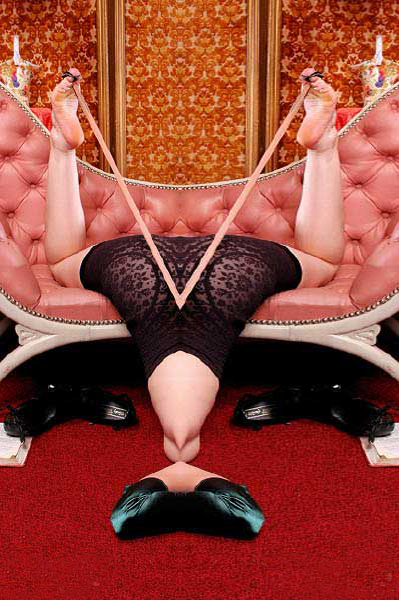 I have to write out this quote by Roland Barthe
"In short, the words can be erotic on two opposing conditions, both excessive: if it is extravagantly repeated, or on the contrary, if it is unexpected, succulent in its newness (in certain texts, words glisten, they are distracting, incongruous apparitions...) " The Pleasure of the Text (42)
image by me
fabulous wordsalad radio show

Just discovered Paul Alan's radio show wordsalad
full full full of juicy stuff...a great way to hear word sounded by its writers
“From Stein to Scalapino to Slam”
Wordsalad is a weekly radio program on WSUM featuring recordings of contemporary authors reading from their own works.
Imagine you’re a commuter in a station of the Metro, hearing bits and snatches of conversation as you pass by Modernist, experimental, performance poets, and Language writers.
Wordsalad streams live on Thursdays from 1 to 2 pm Central (American Time) at www.wsum.org and airs at 91.7 FM in Madison, Wisconsin.
Can our slow old broadband in Australia get it? ...
Not to worry, podcasts of past shows available here...
http://wsum.net/station/archives/55
Thankyou Paul Alan
2.12.07
the scream the scream the scream
 The Wilhelm Scream was a recorded 'scream' that was used over and over and over again in Hollywood films...same recording, over and over again...
list of films featuring the wilhelm scream
lifting bellies, filling petunias Susan Holbrook
 Just got hold of Holbrook's essay on Stein Lifting Bellies, Filling Petunias and Making Meanings through The trans-Poetic... lots of wonderful references to sound. though Muse
'Steins attention is to the aural...
'singling
steins work exemplified in the ballad...will get back to this busy writing that essay for the conference
good egg a review by A Rawlings from Namados Publishing on Susan Holbrook
 namados publishers...
People think poetry is lined verse or they love a good experiment.
You’ve read Good Egg Bad Seed by Susan Holbrook or you will.
You read this book like you’re taking a quiz in Chatelaine or you write a review of Good Egg Bad Seed emulating Holbrook’s book. Or both.
You want to talk to Holbrook about her Gertrude Stein references or you wonder if she’s read Carole Maso essays.
You prefer the poetry (“Smashing through the guardrail and plummeting to your deaths you shout I love you”) or the comedy (“or you shout Fuck.”) or you wish the reviewer wouldn’t split up a wicked quote.
Canada’s micropress publishing scene, with its limited print runs and handmade chapbooks, is news to you or you can’t wait to have this rare and coveted Holbrook by your bed because you saw her at Lexiconjury last year and she was brilliant, absolutely fucking brilliant, when she won the audience over with a reading of her as-yet unpublished chapbook.
You are Susan Holbrook and you’ve written a stellar chapbook called Good Egg Bad Seed with an either/or premise that there are two kinds of people and you’re one or the other (or maybe both) because as you, being Susan Holbrook, have allowed for a binary or a multiplicity with “You are a binary thinker or you are and you aren’t” or you’re not Susan Holbrook but you wish you’d had the idea first to write a poem about two kinds of people.
You will order Holbrook’s Good Egg Bad Seed from nomadosnomados@yahoo.com or you will check out her publisher Nomados online.
the news by gertrude stein and lynn hejinian
 " . . . so everything in the newspaper begins with its not being so and that like everything complicates and makes difficult telling and listening, it may complicate and the newspaper does by making it too easy, so much do they have to deceive the reader into feeling that yesterday is to-day that they have to make it too easy and in making it too easy they do do something they had not intended to do they make it no longer an exciting thing. . . . I said that once to a reporter and he said you have no idea I am sure how terribly hard we work. Yes I said but after you have done all that hard work you have to write it up as it would be if you had known it all beforehand. . . . There is no discovery there is mostly no discovery in a newspaper or in history, they find out things they never knew before but there is no discovery and finally if all this goes on long enough it is all too easy." Gertrude Stein, Narration
"In real life that is if you like in the newspapers which are not real life but real life with the reality left out, the reality being the inside and the newspapers being the outside and never is the outside inside and never is the inside outside except in the rare and peculiar cases when the outside breaks through to be inside because the outside is so part of some inside that even a description of the outside cannot completely relieve the outside of the inside." Gertrude Stein, Narration
"[T]hen there is the news itself, of course, dismaying in content and raising the question, over and over, of the efficacy (or inefficacy) of poetry in relation to the course of events; to read the news is to be reminded of the seeming imperviousness of the world to such improvements as might be suggested by artistic work and artistic thought. . . .When the term realism is applied to poetry, it is apt to upset our sense of reality. But it is exactly the strangeness that results from a description of the world given in the terms 'there it is,' 'there it is,' 'there it is' that restores realness to things in the world and separates things from ideology." Lyn Hejinian, "Strangeness"
1.12.07
ubuweb sound
connie beckley at ubuweb
http://ubu.artmob.ca/sound/artsounds/Artsounds_03_beckley.mp3
Risk and sentimentality, two apparently contradictory aspects, may turn out to be the complementary notions that best define the qualifies of Come Buckley's work. "Everything I do has some element of risk," Beckley says, and the more obvious examples bear her out - for instance, her single-handed construction of a suspension bridge between two 24-toot-high towers at 1985's Paris Biennale. Another one of her works (for which the term "performance art" seems too tepid a description) involved the use of six different versions of "Ebbtide" as accompaniment to Ax fictional love letters. Beckley says that she used the "Ebbtide" records not ironically but "because I love them.""People have told me that my pieces shouldn't work because I do them so straight," she says. Acknowledging that the style of the IN is to do things tongue-in-cheek, she adds, 'I gut I'm patient with having to not take the risk of doing it straight. I don't like any art that doesn't make you put your feelings on the line. I'm devastated when doesn't work, but I'd rather have it that way"
Beckley's pieces have included "Tip Toe," in which she shared a pair of high heeled shoes with a couple of stereo speakers; "Showdown," "which probably came from having nightmares about being strangled by extension cords," and others which revolve in same way around ha relationship to musical sound. Her work on this record is a tendering of part of a scientific text of Isaac Newton, accompanied by her drawing of Newton along with part of the text.
"I was extremely happy about the fact that Newton was an alchemist, which meant that he had another life than what the scientific world would like us to believe, and that life allowed him to become a great scientist. His excitement, the way he wrote about things, appealed to music" -an attitude which Connie contrasts to her feelings about most current writing on art. And she points out that Newton committed more alchemical writings to paper than he did purely scientific texts.

male ecriture -ecopoiesis by Simon DeDeo in abscent mag
'...Language hurts. Language is not about being smart, because language smarts. It smarts because when it is used — as opposed to quotated in between the heavy sixty-six and ninety-nines of the Iowa series, or the ceaseless flows of message-board workshops (password protected and anonymous so that their users can dream of one day claimed to have fallen, whole, of Zeus's skull) — when it is used it is a genuine contact with an alien world. Here is Mei-Mei Berssenbrugge, who understands this well, who thinks as a human being with a death-date measured out:
He calls it their stage, which echoes our first misrecognition of unity. Instances
of false unity, he calls the imaginary, and he locates in them sites of her dreams,
out of which she is able to want him.
("The Swan", I Love Artists)
There is a response to this: the response is that I demand a poetry of action (a — god forbid — écruiture masculine) but that there is room for a poetry of contemplation, a poetry of the intellect.
The antistrophe — as an intellect employed — is that thinking hurts just as much as love. It hurts because thinking is the only release from the animal condition of death, and no immortality is cheap. The kind of thinking in one of Swensen's pieces — in contrast to Carson's insane essays and epic poems — is ersatz, what in the philosophical literature is referred to as a zombie-thought: stripped of any phenomenology, of any qualia, of any what it's like to think.
This is not the cooked versus the raw: this is the edible versus the Denny's menu photograph. You don't have to kill and eat your food for it to sustain: as Lisa Fishman's new book, The Happiness Experiment makes clear, you can create a living world with the quiet words and syntaxes just as well as with the splatterings of Juliana Spahr:
Then find the accounts of the body
in Anais Nin's two volumes
One for pleasure, one for sorrow
Then sing for your supper down among the willows
weaing many buttons
on your two white blouses ("Instructions/Confessions")
extract from abscent magazine Vol 2
There is such an infinite space — despite the tonal similarity — between Swensen's and Fishman's citations, between Swensen's corsets and Fishman's blouses. It is the infinite space of daring to do: daring to create. Juliana Spahr, of course, is herself a phenomenon, her writing an amplification-unto-pain of the writings of someone like Inger Christensen.
Which brings me, of course, to ecopoiesis. Not ecopoetics, the creepily violent Iron John-derivative masculinity of Gary Snyder, but ecopoiesis, the creation of life in a hostile environment. The violation of the inhospitable state of language by the introduction of the poet-as-extremophile.
extremophile — the bacteria that live the extraordinary pressures of the ocean trenches, in sulfuric acid, in the pores of mineral gems. The bacteria that one day — if the human race outlives its own violence — with which we'll bombard the surface of Mars, erasing the pristine inhospitability to build our shopping malls and hospitals on a foreign landscape....'
full view fuck you, aloha, ecopoisesis in abscent
Steins way - her successes and silences by Janet Malcolm

30.11.07
Jacket interview with Jane Joritz-Nakagawa- innovative women poets

http://jacketmagazine.com/34/nakagawa-iv-hogue-frost.shtml
Cynthia Hogue and Elisabeth Frost in conversation with
Jane Joritz-Nakagawa author of Innovative Women Poets: An Anthology of Contemporary Poetry and Interviews


Elizabeth Bishops unpublished erotic poems
Elizabeth Bishop’s unpublished poems with lively annotations
http://www.poetrylondon.co.uk/
ELIZABETH BISHOP
Edgar Allen Poe and the Juke-Box: Uncollected Poems, Drafts and Fragments
Edited and annotated by ALICE QUINN
Carcanet Press £16.95
My love, my saving grace,
your eyes are awfully blue.
I kiss your funny face,
your coffee-flavored mouth.
Last night I slept with you.
Today I love you so
how can I bear to go
(as soon I must, I know)
to bed with ugly death
in that cold, filthy place,
to sleep there without you,
without the easy breath
and nightlong, limblong warmth
I’ve grown accustomed to?
– Nobody wants to die;
tell me it is a lie!
But no, I know it’s true.
It’s just the common case;
there’s nothing one can do.
My love, my saving grace,
your eyes are awfully blue
early and instant blue.
Alice Quinn, the charismatic and sometimes controversial poetry editor of The New Yorker, now Executive Director of the Poetry Society of America as well, has proved herself an impeccable and courageous critic and scholar of modern poetry with the appearance of Edgar Allen Poe and the Juke-Box, her more than- annotated edition of the unpublished poems of Elizabeth Bishop.
Two (poignant, erotic) poems salvaged or rescued by the poet-critic Lloyd Schwartz were published in The New Yorker in 1991 in the context of his article ‘Annals of Poetry: Elizabeth Bishop and Brazil’. A dozen other previously unpublished Bishop poems appeared in The New Yorker in the course of the 1990s and early in this decade; others surfaced in American Poetry Review, The New York Review of Books and The London Review of Books, all, we now know, the fruit of Alice Quinn’s ongoing research, with the permission of Bishop’s literary executor, the life-partner of her last decade.
Readers quoted and copied them; clipped them out; pasted them in notebooks; wondered how they had arrived at the journals and what their eventual disposition might be. Either Elizabeth Bishop was alive in
29.11.07
Ms Salvaggio syncopat'n sound and Gertrude Stein
 Syncopate is a musical term and means to shift the normal accent, usually by stressing normally unaccented beats, like when musicians do a different version of a song and they lengthen notes that were originally short. Hence syncopation syncopative syncopatable syncopatability insyncopatability insyncopatabilitation etc
I'm busy writing an essay on Gertrude Stein and Sounded Language
A sentence has been heard … now listen.
There being some connection between liking and listening.
There is a sound and obliqueness
Ruth Salvaggio in her text The Sounds of Feminist Theory suggests that we pay a new close, closer attention to the sound of language – something she insists is neither voice, nor the spoken word, nor metaphor… ‘I mean the actual effects of sounding, wavering language in critical and theoretical writing- a distinctive turn towards the oral within the panorama of contemporary thought’. This place of resonance she tells us, will ‘instigate a new resounding language (that will) alter what we (can) hear and see and know’(S133).
I am reading Gertrude Stein as Feminist Theory and a theory about this sounding. Stein whilst not a feminist is a central to…feminist theory in terms of language, in that it offers an ‘indulgence in the transmutive potential of words, their ability to affirm and question and resist and endlessly suggest meanings, to be used for everything they are worth, and more’ (S5) her writing it can be argued is written as such but… I am vitally interested in work that ‘crosses over and beyond linguistic border, fusing and refusing the boundaries’ and as a visual artist I have come to feel after a 40 year engagement with the practice, like Salvaggio, that the ‘metaphors of visibility in women’s text will only go so far in helping us follow the changing and refracting properties of language as a medium’ in potential. The ‘possible meanings generated in a mobile language and epistemology question simplistic links between vision and knowledge, turn away from the idea that writing is a mere ‘transition’ of truth and note how language is continual altering what we see and therefore what we know.’ Steins work vibrates with ‘sounded oralities’…
Dupless echoes this ‘language does not lie still there is no permanent referent for words rather language suggests, evokes and resonates….
25.11.07
Manifesting Literary Feminisms:Drafts, Grafts, Nexus and Faultlines Conference

Literary Feminism Conference in Melbourne 13-15 Dec 07.
I'm giving two papers
A little glossary of big whoppers-feminist experimentalisms
and Gertrude Stein and Sounding the Bright Ineffable
Caroline Bergvall reading/sounded pets
Bergvall reading more pets
From Upenn... thankyou
a more-cat
a more-dog dog
a more-horse
a more-rat
a more-canary
a more-snake
a more-hair
a more-rabbit
a more-turtle
The poem goes on to complicate itself with chains of words
a more-turtle cat
a more-turtle-more-cat dog
a more-dog-more-cat dog
And so on. (Fig 86-87)
Also eclat download able from ubu web
great 'women' artists
 Eva Hesse graff girlz mephista Beatrice Riese M.I.A. Kiki Smith Julie Becker Kara Walker Judy Chicago Mara Taber Yoko Ono Feminist Artists More Feminist Artists Cindy Sherman Frida Kahlo Barbara Kruger Lorna Simpson Women Artists Artemisia Gentileschi Julie Speed Women Artists in History Crossing the Threshold Agnes Martin The Slits Bridget Riley Rachel Whiteread Maya Deren Sarah Lucas
great presses and journals
HOW2 belladonna* Kelsey St. Press Calyx So To Speak Kalliope Wicked Alice Dancing Girl Press Chicory Blue Press Firebrand Books Paris Press Seal Press Volcano Press Feminist Press Perugia Press repopo Red Letter Press Kore Press Switchback Books Outside Voices FOURSQUARE Big Game Books PoemMemoirStory(PMS) My Life Meritage Press Dead Horse Review Palm Press Flat City Press No Tell Motel Books Dusie Half Empty/Half Full Horseless Press Pilot Bird Dog Lame House Press Xantippe St. Elizabeth St. The Tiny ensemble jourine Chain Fence
Subscribe to:
Posts (Atom)


 View Majena Mafe's Linked In Profile